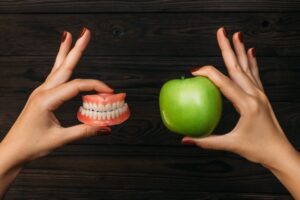
Modern dentures are a tried-and-true solution for replacing missing teeth, improving both oral function and overall wellness. However, did you know that those with this prosthetic may not always get the nutrients they need? Research shows that individuals who’ve worn them for two years or more tend to have lower nutrition markers in certain areas compared to before they began using them. So, why is this the case? Keep reading to discover how dentures affect your nutrition and what you can do about it.
How Do Dentures Affect Eating?
When it comes to chewing, this prosthetic doesn’t quite give back the full strength of your natural bite. Studies show that full dentures restore about 20% to 25% of your bite force, while partial dentures provide it even less. This can make it difficult to chew through certain foods properly, which in turn affects your body’s ability to absorb essential vitamins and minerals.
Over time, the fit of your dentures will also change, potentially causing them to slip out of place while eating. This can make it even harder to maintain a balanced diet.
How Does It Impact Your Health?
When your body is malnourished, it can have a noticeable impact on how you feel. Deficiencies in essential nutrients can lead to fatigue, and may even contribute to mental health concerns like anxiety or depression. There may even be some physical signs, such as a swollen tongue, cracked lips, or general weakness (which are all common symptoms for low iron).
How Can You Get the Nutrients You Need?
Here’s the good news: there’s a solution that many people have found to be effective! Instead of relying on supplements for your health, you can connect your dentures to dental implants.
This option uses posts that are fused directly into your jawbone. It provides a strong, stable support for your prosthetic. This eliminates the worry of dentures slipping out of place when you are eating and will let you properly chew through all your food. Many items that you have to avoid with dentures can be eaten with this option, letting you get the balanced diet you need.
Better yet, they can restore up to 70% or more of your natural chewing ability! However, they aren’t the right solution for everyone immediately. Since the implants are anchored into your jawbone, it needs to be dense enough to support the posts. Your dentist can ensure you’re a good candidate for them with a consultation, and work with you if they aren’t the right treatment for you straight away.
About the Author
Dr. Luke Lumpkin earned his Doctor of Dental Surgery from the University of Oklahoma College of Dentistry. He understands how a simple dental issue, like trouble chewing, can significantly impact your health. If you think your dentures might be affecting your nutrient intake, schedule an appointment or call us at (918) 336-6777.